Showing posts with label europe. Show all posts

Friday, March 28, 2008

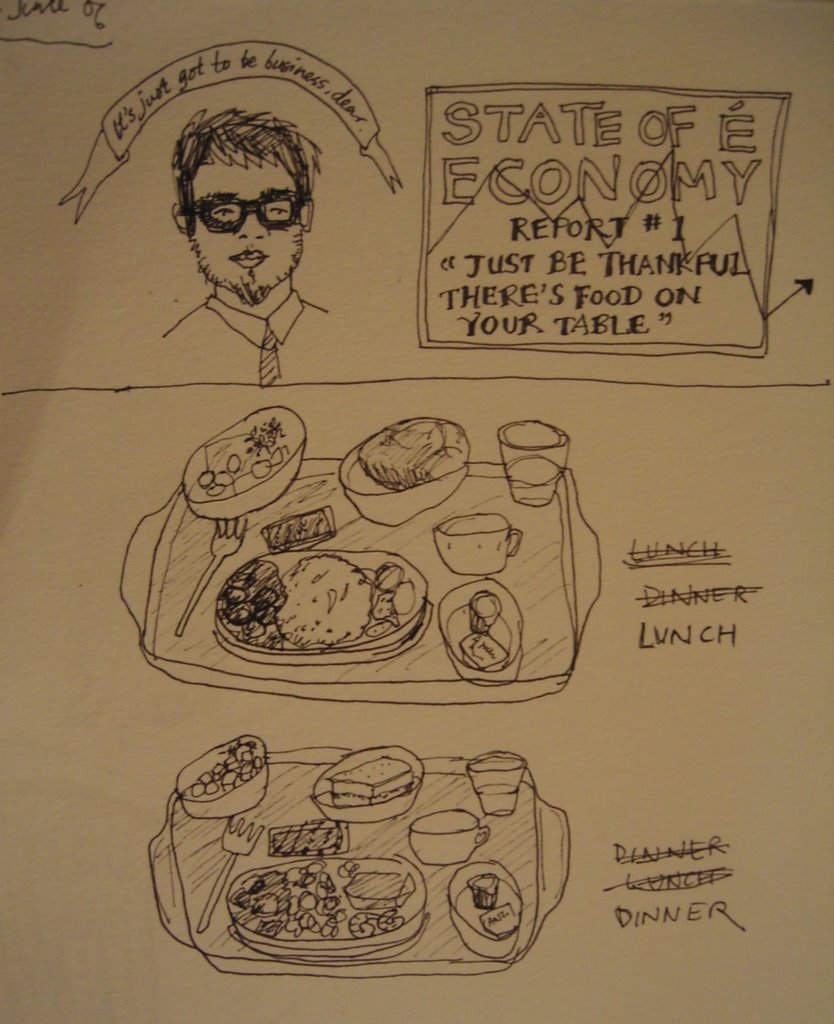
homme riche sans l'argent

Departure (飛)
Didn't manage to take any photo in Paris, so here's one instead of sweet J, man in a cardigan at the new Changi Terminal 3

European cities are often written in a language I do not understand - an architecture from a past that is monumental and seemingly indestructible (those thick stone walls, wrought iron balconies, tall windows, cobbled roads, statues on building facades and the opulence of recycled palaces). This classicism is in turn juxtaposed against an increasingly fluid, diverse population of migrants from North Africa and Asia, as well as all the usual signages for globalisation on shop fronts.

Admittedly, I saw very little of Paris in the last three days. Only their museums (I recommend the excellent museum of decorative arts near the Louvre, and the highly accessible Centre Pompidou built in the 70s) , the hotel and whatever view there was from the car of the arc de triomphe.

But from what little I saw, it would appear that nowhere other than Japan do people take culture more personally and seriously as the French. And no doubt a kind of mutual admiration often takes place between both these peoples. At French museums, no matter what time of the day or what day of the week, queues can be found snaking the ticket counter and stretching outside the building (even when it rains!). Going to the museum is to the French what going to the shopping mall is to the Singaporean. Sad, but true!

I had once asked an old Japanese gentleman I had met at a lunch why was it that Japanese companies(other than for tax breaks) invested so much in setting up their own museums and collections. As a response, he drew me a convex curve against a concave one on the napkin. He explained that one should aim to be a rich man, but after a certain amount of wealth has been acquired, there are 2 options open - to acquire more wealth, or to move on to another new plane altogether and become "a gentleman" (his term), a man of letters and learning, and a man who gives back to society. To many Japanese companies, the aspiration is to considered "a gentleman".


A colleague once quoted something she had read that there were "rich men" and there were "poor men with money". Ah, us idealistic amps were just wondering about the possibility of that other species, "rich men with no money".

Monday, June 25, 2007

jetlag

Which I did not quite suffer from, despite Singapore being 6 hours ahead of central European time.

There is the comfort and relief of being home, and the discomfort of the weightiness of home. Travel, even for work, provides a kind of suspension. Perhaps it is because summer in Europe provided the shadiest of day, even at 9pm. Once in Singapore, gravity hits. And the heavy, moisture-laden air.

As promised, some silly comics during my visit to Art Basel, the Venice Biennale and Documenta 12- these are all I managed when I was awake on the hotel bed/train/plane. J told me his weeknights then were spent watching Matthey Barney's Cremaster Cycle (which showed at the National Museum of Singapore), trying not to cough, and working.


(1/2) J & Y appreciate art (3) Art appreciates! (4) J appreciates more art (5) Art appreciates Venice (6) J ____ work (7) Singapore artists appreciate Venice (8/9) amps prisoners of artwork

And contrary to what these smarty pictures seem to say, I did see some art I liked, remembered and learnt from. Yes, yes, besides the work - of course.

Sunday, June 17, 2007

city of return

(Drawings and pics of the trip coming up soon when I get back home!)


The night before last my colleagues and I got lost in Venice. And I thought of Calvino's Invisible Cities.

As it was still early after dinner, we had taken a meandering, leisurely walk through Venice's narrow alleyways towards the city's edge to catch a ferry back to Lido island. We did not know where exactly we were, or which pier we would eventually find. And when we did hear the gentle lapping of the water against the city's edge, we did find a pier. It was not a pier we recognised, but the sign said that one of the ferries would be headed to Lido. We were surprised by our good luck.

We waited about 20mins before the ferry arrived and boarded it. It chugged slowly off and sputtered to a stop along the way at some other quiet piers. The ride was taking longer than we had expected. But the air was cool, and in the darkness, who knows where we were all going anyway?

Then each stop grew more quiet. The lights, if there were any, were lonely. It was ten and night finally relented to dark. And when we finally grew a little concerned, the ferry did a last sputter. The ferry attendant declared the name of the stop - we did not know what, except that it was clearly not Lido. We trooped off the ferry. The cool air turned chilly, and the romance of not knowing was now decidedly less charming.

"Hey," one of us suddenly exclaimed, "we are back exactly where we started!"

Of course! I wanted to laugh. There was a humour in this, this returning. In Venice, this cinematic city - more imagined than real - returning seemed an apt narrative strategy. But there were more pressing concerns, such as getting back to Lido before the ferry services stopped or, in fact, finding out exactly where we were and how we should get back.

The attendant advised "Go San Marco, San Marco -", naming the famous central square. "Follow the signs, all go to San Marco!"

We tried to follow the signs, painted on the walls of some of the buildings. Until the signs disappeared. Each turn brought us to a new small square, a new nexus of little alleys, or another bridge - and the question "to cross?" Each alley seemed similar and familiar, but never entirely. Time was a minotaur - and smaller minotaurs were the blisters on some of our tired feet.

There was no surprise ending. It was, as expected, happy - the expansive and busy San Marco square did, after some 20 minutes or so of frantic wandering, opened up suddenly before us.

In Calvino's collection of vignettes, his narrator/traveller is Marco Polo, whose home, of course, is none other than Venice. In fact, Calvino gives Marco Polo this line - “Every time I describe a city I am saying something about Venice.”

Perhaps it is apt that Venice should host one of the world's oldest international art shows. However abstract, art returns to and is understood always in context - whether its own, its creating or its audience - immediate or distant.

Today, I left Venice and arrived in Kassel, the German city for Documenta 12 - that other contemporary art show. It is a tranquil, slow - even bland - city, so unlike the over-heated Venice. But Kassel was not always tranquil. It was the site of a subcamp of Dachau concentration camp during WWII. In 1943, it was heavily bombed, most of its city centre reduced to rubble. The first Documenta in 1955 was perhaps a response to all this - an attempt to show art amidst ruins and against the recent past.

Thursday, June 14, 2007

i am

art-ed out

3 whole days of looking at art here, and it is hard to pretend that it is not about the money. While, visually or intellectually, the works have not been engaging so far. Perhaps Venice and Kassel the next few days will be different.

Silly me brought a camera, but did not bring the wire to download. But if you are keen to see some pictures of Art Basel, click here.

Monday, June 11, 2007

cities to be seen


love-hate doodles

I'll be going to Venice, Basel and Kassel late tonight - for work (yes, hard as it is to believe, there's work to be done in these cities!). But it must be yet another sign of growing old, that despite the seemingly exciting destinations, us amps are dreading being apart.

Such cringey stickiness aside, we are happy to share that there's an Invisible City you can actually see (ah, loveliest of oxymorons!) without having to leave these shores -

So go get your tickets to and check out the trailer for Tan Pin Pin's latest documentary Invisible City here!
The much anticipated newest work from Tan Pin Pin Invisible City opens 19 July 2007 with free screenings at NUS followed by a commercial run at The Arts House. Tan Pin Pin, one of Singapore’s best known filmmakers, directed the critically and commercially acclaimed Singapore GaGa as well as the multi award-winning Moving House. She now turns her sharp and witty eye to the subject of memory.

Invisible City chronicles the ways which people attempt to leave a mark before they and their histories disappear. From an avid amateur film director trying to preserve his decaying trove of Singapore footage to an intrepid Japanese journalist hunting down Singaporean war veterans, Tan Pin Pin draws out doubts, regrets and the poignantly ordinary moments of these protagonists who attempt immortality. Through their footage and photos rarely seen until now, we begin to perceive faint silhouettes of a City that could have been. Quiet, elegiac and memorable, this is a singular cinematic experience not to be missed. (Taken from the film's website)

Monday, June 19, 2006

all art-ed out!

tandoori
UK’s national cuisine

Just when I thought I’ve had enough of art for the week at Newcastle, I was taken on a tour of a small area called Oesborne Valley where all kinds of arts and cultural activity have been taking root. Aargh, enough!

But it was strangely inspiring.

cinephile christo
A beheaded Christo, since I was taking this photo in secret

I met Christo, a geeky cinephile (is there any other kind of cinephile?) behind the Star and Shadow Cinema – a micro cinema. This is new term I learnt today. A staff at the Baltic Arts Centre, he would take time off to run a cinema (for cinephiles called the “cinecide”) 2 days a week. And since the Oesborne Valley property came up, he formed a partnership with other micro cinemas like the “A side” (artist films), “the other side” (LBG cinema) and an anarchist cinema to take over this old disused building at Oesborne Valley.

Called the Star and Shadow Cinema, it is due to open in 22 July. When we visited it, it was still a really run down place still. We found out from Christo that since he did not have money to renovate it, he had put an ad in the papers and online for “builders” to help one weekend. So everything in that building was actually hand-built by volunteers and himself over the past few week! Impressive! Shy Christo in his migrating geese sweatshirt, tortoise-shell glasses, curly hair and stone-washed black jeans showed us a door/wall – he good-humouredly told us he was especially proud of this piece of pretty makeshift construction, and smiled cheekily. When we left, a group of volunteers had just arrived for a General Meeting.

art works? you don't say...
“The Art Works”, a new gallery renovated using the materials of its original warehouse and run by an artist renting out space to emerging artists with no commission for works sold. Mighty good idea!

The Cinema is next to “The Art Works”, and just down the road is an older establishment called “The Cluny”. Owned by Mike, a theatre practitioner who had bought it in the 70s for close to nothing, it is an an old flax mil by a tributary of the River Tyne. It houses some 40-50 different artists, designers and crafts persons. They run the facility like an artist co-op. Artists decide how it is run, the rent that is charged, and whether a new applicant is accepted. It is, like the cinema, a run down no-frills sort of place dis-used and abandoned by its previous tenants.

the cluny

This is all what is meant by the term “regeneration”, the twin sister of “renaissance”. Renaissance City is what Singapore aspires to (with or without reference to15th C Venice), but regeneration would not be on our minds. Regeneration is for backward, derelict, beat up, crime-infested cities! Regeneration is for cities with old, disused, derelict buildings. Regeneration is for Newcastle, where its 60 coal mines are no longer. Regeneration is for a culture that hates to destroy and would use and re-use. For us, we would rather a rebirth – though from what we never quite know.

Still, I am glad to be home tomorrow. It is where I am daydreaming I would one day set up some kind of gallery and artist studios cum "micro cinema" too.

Saturday, June 17, 2006

superhumanism (and harry potter)

A Singaporean living in Newcastle and whom I met said this when comparing the UK to Singapore: "In some ways, the UK is very backward, but in other ways, it is way ahead."

OK, so this may sound like a generalisation that would apply to any and every country, but in the context of the conversation, it was a useful reminder that for everything that Singapore could take pride in having achieved, it was often at the cost of something else equally valuable.

superhumanism
click for larger view

During the last 2 days of the conference, I heard from artists, cultural leaders and even a judge on the impact of their artistic or cultural endeavour in transforming communities. And the most important and interesting lessons for me were learnt from countries or communities of the "third world" (I feel compelled to use these inverted commas because the whole chronology of first/third world seemed at odds with the arts and culture) – countries or communities marked by social and material poverty.

A government official from Columbia admitted with no embarrassment of Columbia’s troubles, but spoke with a measured confidence about the conservation of Gabriel Garcia Marquez’s birthplace, the promotion of the diverse Columbian musical traditions, the development of village-level artist schools and the results of a Scandinavian study which showed that Columbia was one of the happiest countries in the world (I’m not sure if the study surveyed the drug lords too!).

American artist Rick Lowe described the moment when a young person, viewing his sculptures expressing the problems of environmental destruction, had turned to him and challenged him thus: "It’s ok that your sculptures tell us about all these issues and problems of our community, but I know all that. What’s the use of telling me about the problem that I know." And so Rick Lowe started to think more about social sculpture, and described to the conference his powerful Row House Project with a low-income and rundown Houston neighbourhood to transform the physical and living landscape through art. Artists coming together with their community to change their environments. No self-pity or endless griping about the lack of state funding here!

Then there was Justice Albie Sachs, a former South African freedom fighter (his one empty shirt sleeve a reminder of the real cost of freedom) and appointed by Nelson Mendela as a member of the Constitutional Court. He spoke this morning about the decisions behind the liberating design and the deliberate location of the new South African Constitutional Court beside the No. 4 Prison, a symbol of apartheid injustice past. And what beautiful, human architecture! What pride in a freedom, but also a culture hard won!(click on the link to take an online tour of the building and its art)

Justice Sachs would guide tours for the building and would train other guides. He described how he wanted these young guides to tell the stories he told and feel the same pain and struggle, but wisely concluded that he had to let go – the youth must form and tell their own stories, with the same irreverence, boldness and imagination that he too had when he was young.

A culture can be magnanimous. It is more than a material generosity. Perhaps as with a person who has stood the darkest trials of spirit and body and knows for certain what cannot be taken away, a culture acquires magnanimity only when it holds the same knowledge with confidence. And as with that person – Justice Albie Sachs, Kuo Pao Kun – such a culture will love its heritage in equal measure as its future.

alwnick castle

On a lighter note, the conference was also guest to the generous Duchess of Northumberland in her beautiful castle, a film location for Harry Potter 1 & 2 and some other films (I forget which). Just in case you thought the conference I’m at is all we-are-world inspiration, there’s also aristocracy and what old money can afford – canapés, fish and chips, lots of Newcastle ale, wine, a fantastic garden (though cheesily lit), and a 13th century castle bathed in the soft evening light of an English summer that faded only at ten.

northumbria green starry window 2
the northumbrian sheep and my shoe on the duchess's precious fibre-lit floor

Wednesday, June 14, 2006

Paris had his Helen

virgin2
Will you choose her? The Virgin Mother, Damien Hirst’s 35ft tall bronze sculpture in the courtyard of the Royal Art Academy for their annual summer exhibition.

At the National Gallery, a guide is introducing a 17th Century (?) painting to a group of 7 year-olds on a school excursion. It depicts the handsome youth Paris, seated under a tree with Hermes behind him and three naked goddesses before him – Athena or Minerva, the goddess of wisdom; Venus or Aphrodite, the goddess of love; and Juno, the goddess of wealth. He holds out an apple in offer. Who will he offer it to? And implicitly, what does he desire in return?

Guide: What about you all? Will you choose intelligence, knowledge; or love, the most beautiful woman in the world; or money, fortune?

Some of the kids raised their hands, eager to give their answer. Others seemed deep in thought, or perhaps they are just bored.

Guide: Tell me, how many of you want to be intelligent? You think intelligence is good?

3 maybe 4 hands shot up, both boys and girls.

Guide: Ah, and how many of you want to marry the most beautiful woman or the most handsome man in the world?

6 or 7 kids raised their hands, giggling, shouting “me!”. Most were girls, save for a boy with ash-coloured hair who coyly smiled.

Guide: I see Matthew, you’re a smart boy. And finally, how many of you want to be rich, to have lots of money, cash –

Before he could finish, the rest of kids all raised their hands, even those who had, until now, not seemed to be engaged by the naked goddesses and the curly-haired youth.

Well, we all know what Paris chose in the end. But he’s clearly a dying breed, save for cheeky Matthew.

st james triumphs 2
There were several long-haired art students doing these detailed pencil drawings of paintings at the National Gallery. Thus inspired, I took out my notebook and pen too, for my version of this painting. Click on image for larger view in flickr

After 2 days of meetings and some art in hip happening London, I am sitting in a rather dreary Newcastle room where there is no aircon to counter the ringing silence (although half an hour ago, a woman’s moaning seemed to have defeated even the solid walls of this restored 19th century building), none of these 3 fleshy ladies would convince me to trade in an apple, unless one of them changes her name to air-conditioning! I did think while watching the kids that if I really had to choose, I would rather settle for Minerva. But then again, man’s wisdom cannot ease fear, insecurity and worry. It has not delivered peace and salvation – at least not of the sort that lasts. And it certainly has not conquered death. For all that, I chose Jesus than a woman with an owl and a shield.

Monday, June 12, 2006

deja vu

I would probably be exaggerating to say that even the flight path felt familiar. So I shan't. Only the bad airline food and service are (especially after J and I have experienced the automatic upgrade the last time we flew). But when I stepped out of the plane, the patterned carpet, the characterless corridors and the nightmare queues at immigration - ah, Heathrow, the UK. Only this time, the number of migrants/residents from South Asia rivalled that of the tourists.


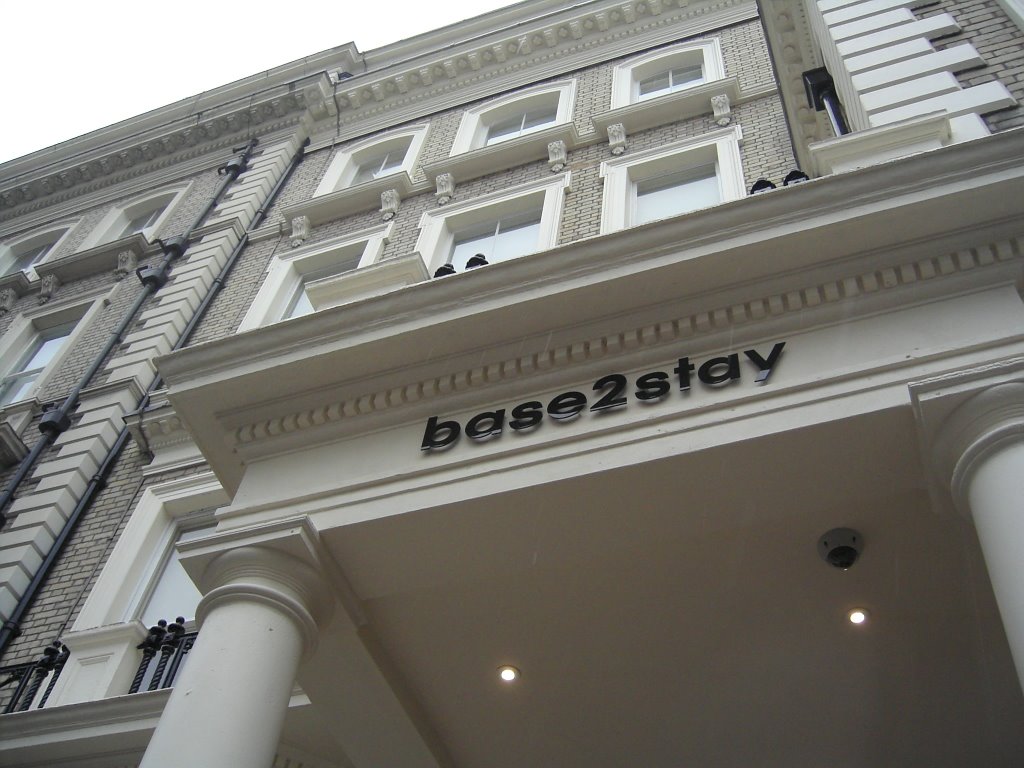
We are staying at a 1-month old little hotel by Earl's Court, in a neighbourhood where a Rolls is parked by the curb, but turn a corner and it's student housing.

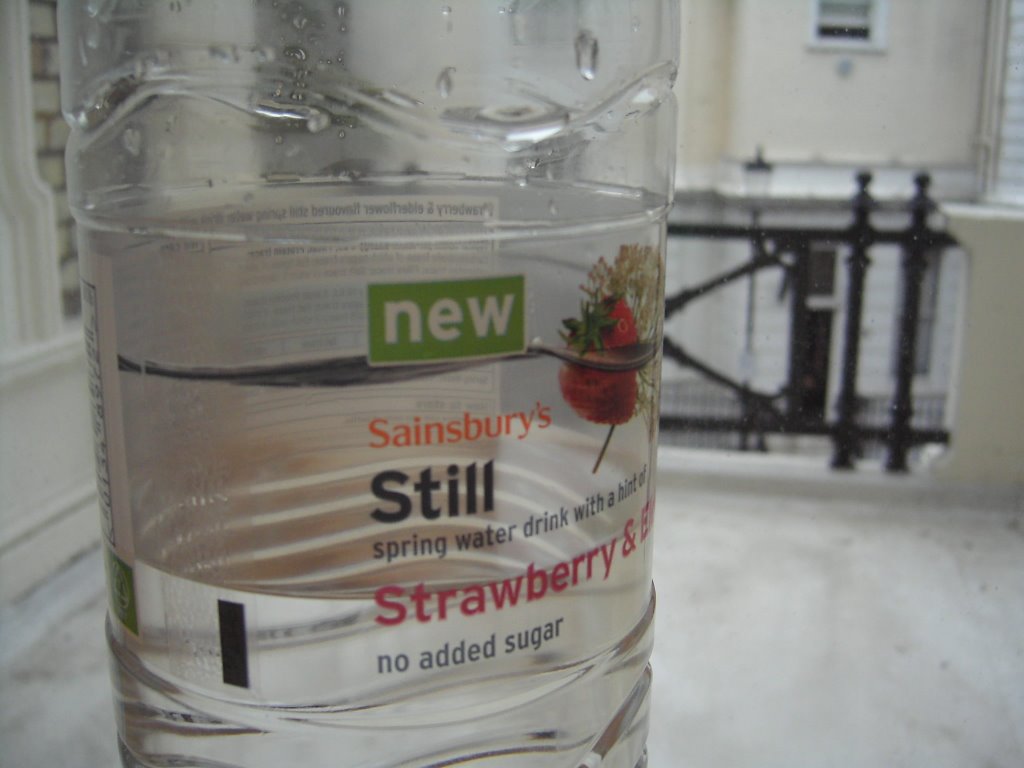
And true to my recurring dream, the first stop after my colleagues and I dropped our bags was to Sainsbury's.